
Chilean fishmeal and fish oil: specifications for feed buyers
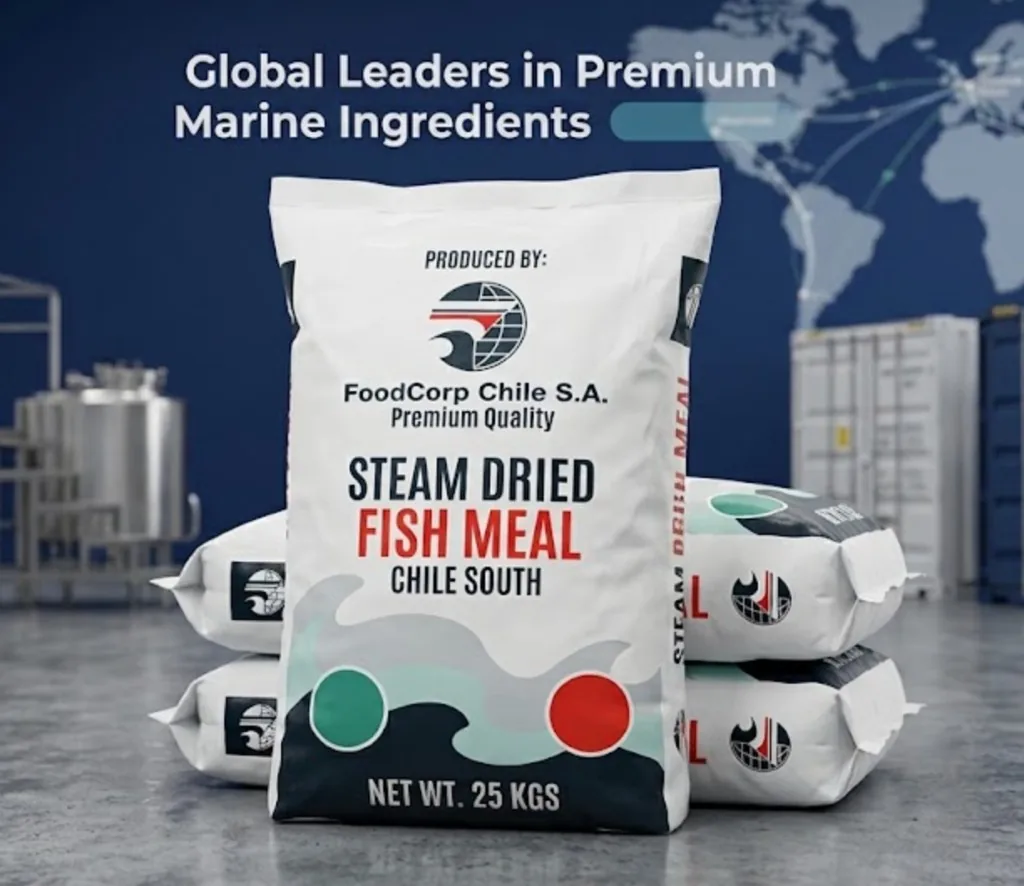
Chile is a major global supplier of fishmeal and fish oil, with reduction plants processing wild pelagic catch from the Humboldt Current system. FoodCorp Chile operates two steam-drying plants in Coronel, producing meal and oil from anchovy, sardine and jack mackerel. Here is what feed buyers need to specify.
Fishmeal protein bands
Two standard bands are offered:
- 66–69% protein — standard steam-dried meal for broad aquaculture and livestock feed formulations.
- 68–72% protein — premium meal with higher protein and lower ash, suited to high-performance aquafeed.
Both are packed in 1,250 kg jumbo bags for container-load export. Ask for a full COA covering protein, fat, moisture, ash, salt, TVN, histamine and sand/silica.
Why steam drying matters
Steam-dried meal — as produced at FoodCorp's plants — generally offers better protein digestibility and lower oxidation risk than direct-flame ("rotary") dried product. For aquaculture formulations where consistency matters, specify steam-dried and request batch COAs.
Fish oil grades
Fish oil is a co-product of the same reduction operation. Crude oil is standard for feed mills with refining capacity; refined grades can be discussed. Packing: flexitanks for container loads, drums for smaller volumes.
Send your protein band, volume and destination and we'll reply with specifications and a price from Coronel.
Frequently asked questions
What protein levels does FoodCorp fishmeal offer?
66–69% and 68–72% protein bands, steam-dried and packed in 1,250 kg jumbo bags.
What raw material is used?
Wild pelagic species from FAO Area 87 — primarily anchovy (Engraulis ringens), sardine and jack mackerel.
Is fish oil available from the same supplier?
Yes. Fish oil is a co-product of fishmeal production at FoodCorp's two Coronel plants — crude and refined grades available.
Further reading
Source Chilean fishmeal & fish oil
Tell us the protein band, volume and destination port for a specification and quote.